Beginning work at an early-stage startup
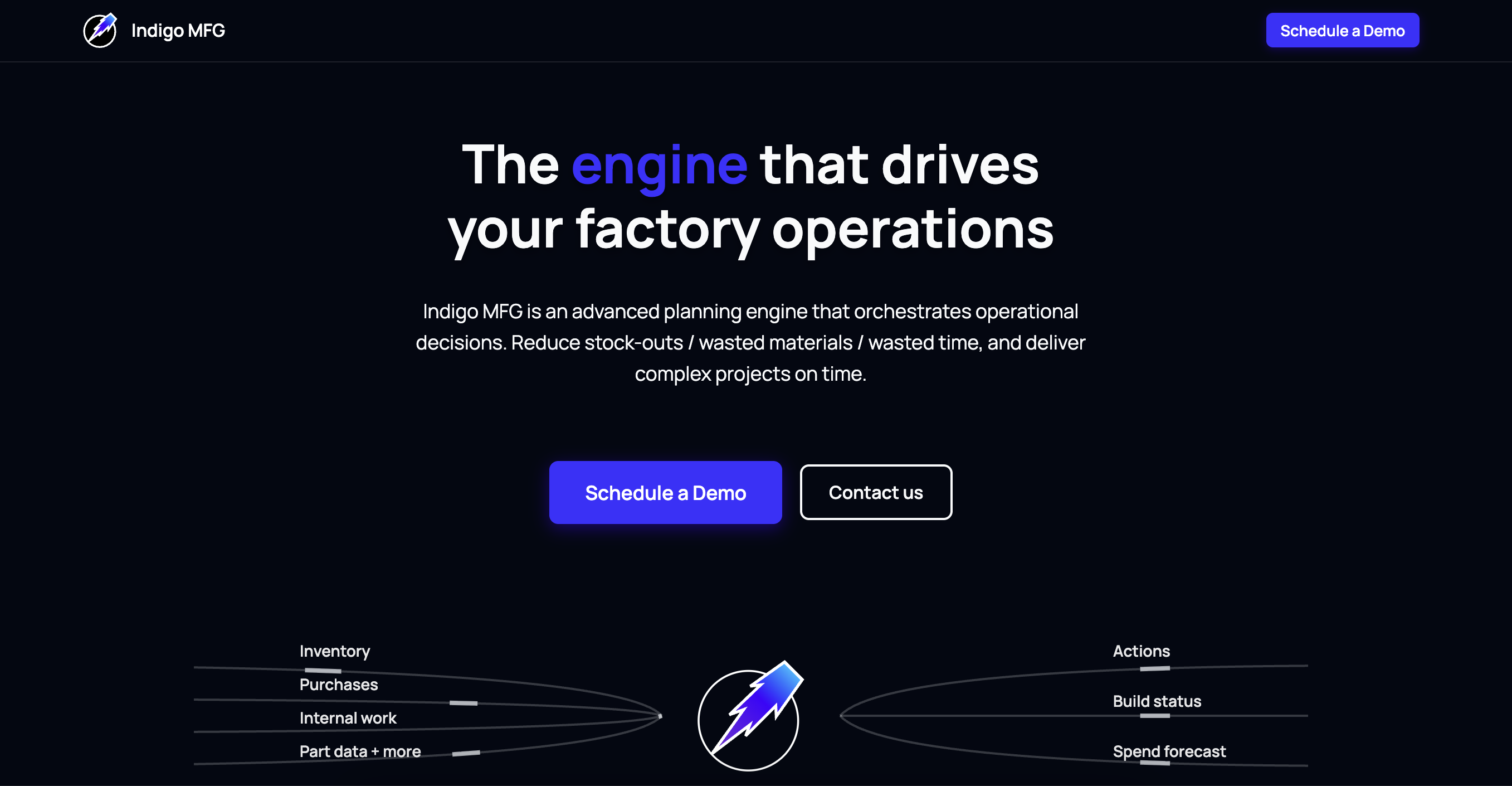
Above is my first project with Indigo Manufacturing: a short marketing animation created to support early brand and product storytelling. When I joined the team, I jumped in wherever design support was needed, whether that meant UX, visual, or marketing work. Animation wasn’t something I had a deep background in, but it was a great opportunity to stretch my skill set and help the team move quickly.
I started by building the animation frames in Figma using prototype tools, since that was what I was most familiar with. When I realized exporting directly from Figma wouldn’t work for what we needed, I spent time exploring workarounds and different tools through community plugins. I eventually landed on Aninix, which let me bring my frames into a timeline-based animation environment with much more control over timing, easing, and exports. After exploring lots of Aninix YouTube tutorials and Reddit threads, and honestly just trial and error, I was able to deliver an animation that clearly communicated the product vision and met the team’s goals.
This project ended up being a really rewarding learning experience. It pushed me outside my usual workflow and reinforced how important adaptability is on small teams. Being willing to try new tools, troubleshoot, and figure things out as I went helped me contribute in a meaningful way — and added a new skill to my toolkit along the way.
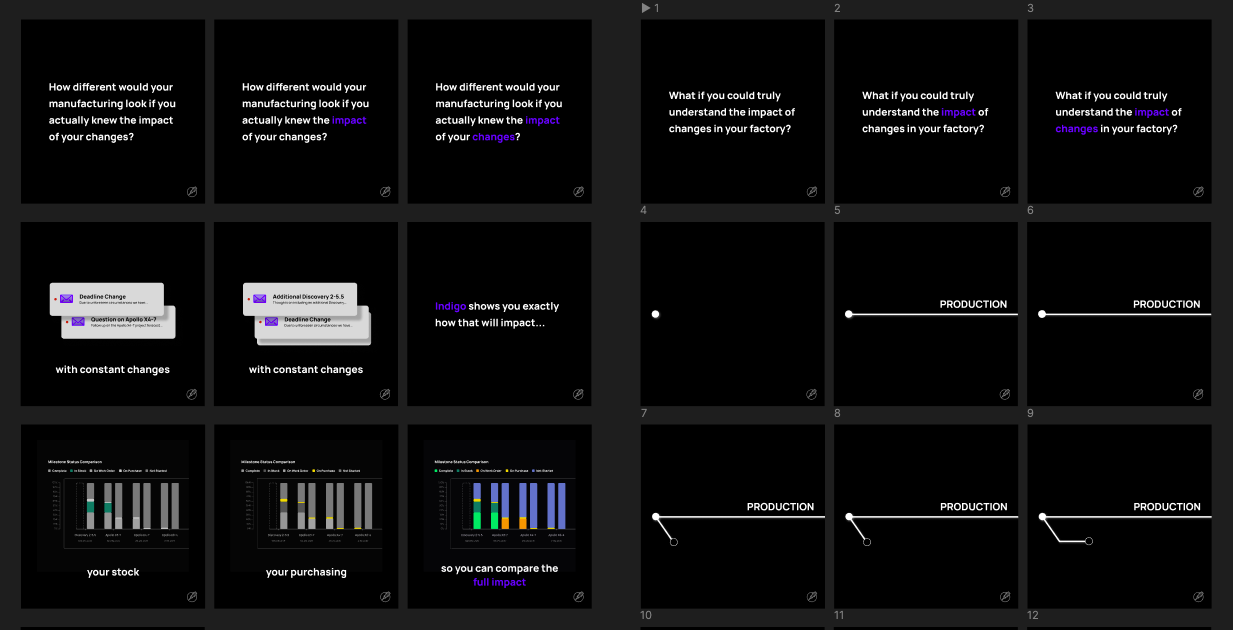
My initial brainstorm, creating storyboards and translating them into individual frames linked together on Figma
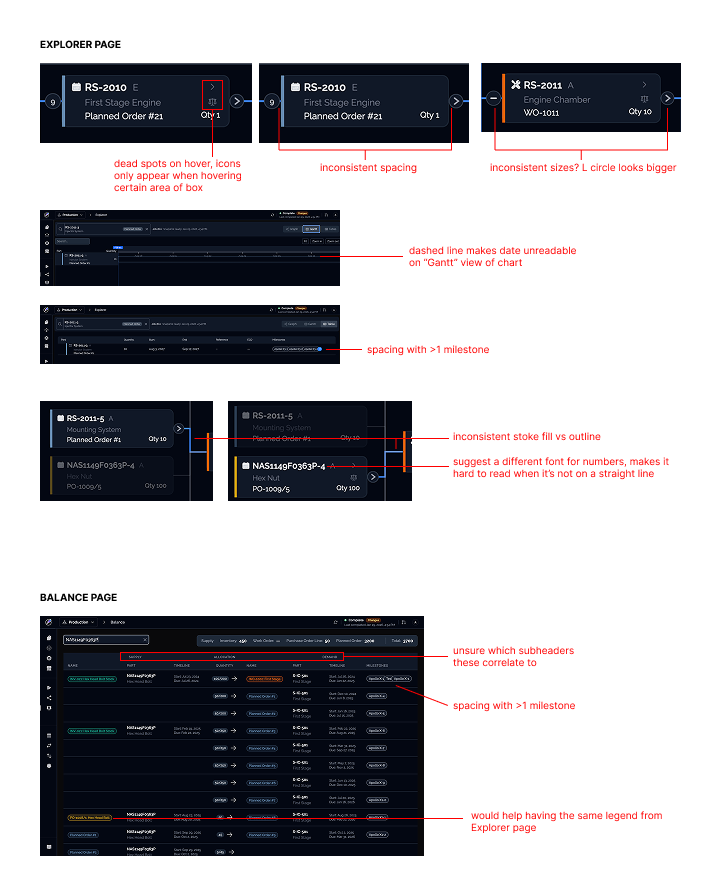
Indigo Manufacturing was in the process of defining its product and brand identity while rapidly building its core application. As the product evolved, inconsistencies in visual design, UI patterns, and interaction behaviors began to surface, making the experience feel fragmented and difficult to scale. The current project I'm working focuses on establishing a cohesive UX and visual foundation to support both immediate product needs and long-term growth.
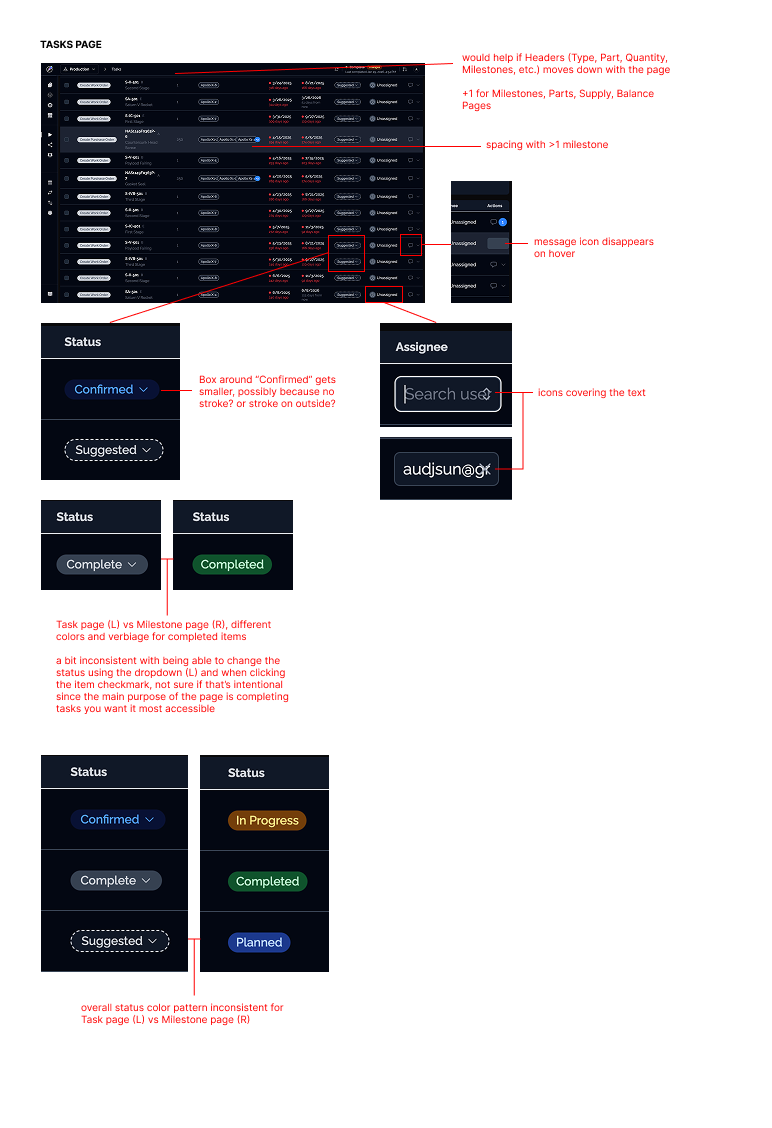
The work centers on a comprehensive audit of the existing application to identify usability gaps and design inconsistencies, and will follow with the creation of a unified visual language and foundational design system. By defining core UI components, layout principles, and styling guidelines, the project will create a scalable framework that improves consistency, accelerates future design and development, and aligns the product experience with the company’s emerging brand direction.
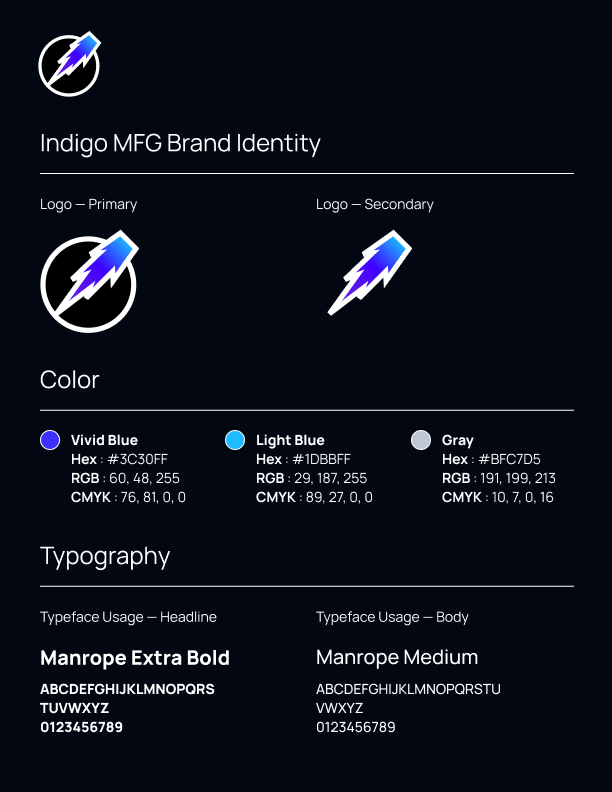
In beginning this project I created a very simple brand identity from my first glance over their public facing site’s HTML
I am currently finalizing my audit by comparing the inconsistent components I identified within the application and consulting stakeholders to determine their preferred approaches. Using this feedback, I am creating mood boards that explore different style directions—including visual style and tone, layout and density, and overall UI personality—to gather further stakeholder input before developing the final design system.